



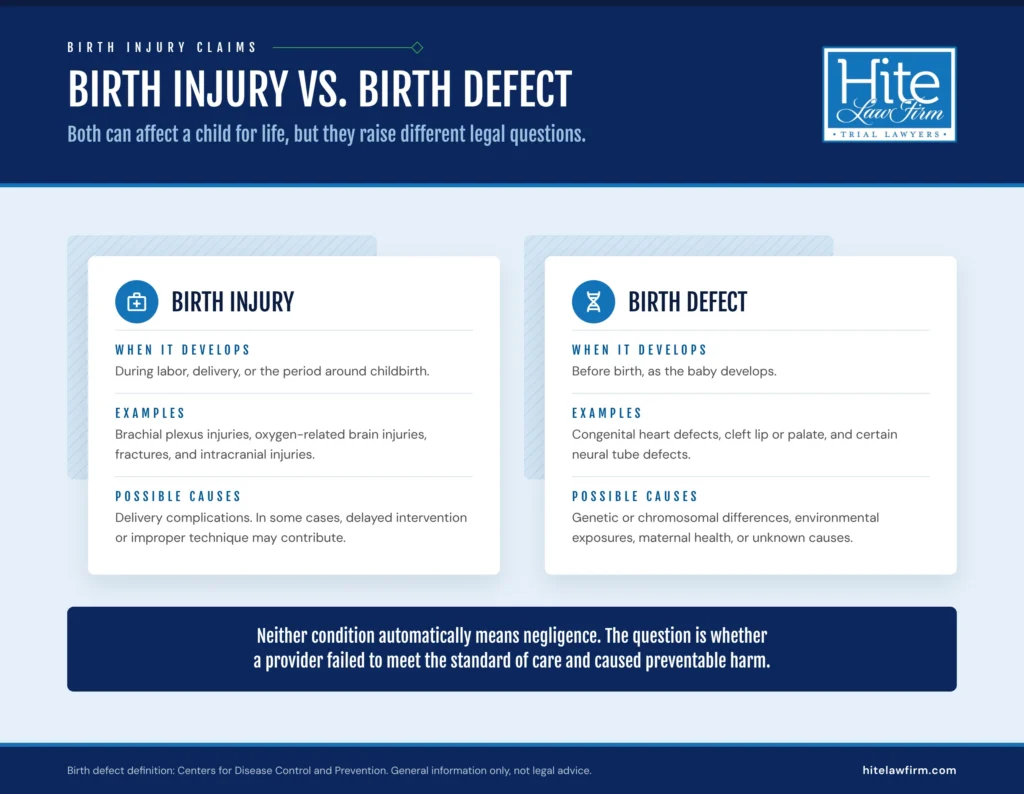
The primary difference between birth injuries and birth defects is how and when the condition develops. Birth injuries generally involve harm occurring during labor, delivery, or the period surrounding childbirth, while birth defects are structural or functional conditions that develop before birth.
Although both can affect a child’s long-term health, they raise different medical and legal questions. A birth injury may result from complications during delivery, while a congenital condition may develop because of genetic factors, environmental exposures, or causes that remain unknown.
For families considering a birth injury lawsuit in South Carolina, the question is whether a healthcare provider failed to meet the accepted standard of care and caused preventable harm. A South Carolina birth injury attorney can review medical records and consult qualified experts to determine whether the circumstances support a medical malpractice claim.

What Is a Birth Injury?
A birth injury involves physical harm sustained by a baby during labor, delivery, or the period surrounding childbirth. Some injuries resolve with treatment, while others may cause lasting neurological or physical disabilities.
Common examples include:
- Brachial plexus injuries: Damage to the nerves controlling movement and sensation in the shoulder, arm, and hand.
- Oxygen-related brain injuries: Brain damage associated with inadequate oxygen or blood flow before, during, or shortly after delivery.
- Fractures: Broken bones, such as collarbone fractures, that may occur during difficult deliveries.
- Intracranial injuries: Bleeding or other trauma affecting a newborn’s brain.
These injuries can arise from complications that occur despite appropriate medical care. In other situations, delayed intervention, improper delivery techniques, or failures to recognize warning signs may contribute to the harm.
Determining the cause requires examining the medical circumstances surrounding the pregnancy and delivery.
What Is a Birth Defect?
A birth defect is a structural or functional condition that develops before a baby is born. According to the Centers for Disease Control and Prevention, these conditions can affect how a child’s body develops, functions, or both.
Examples include congenital heart defects, cleft lip or palate, and certain neural tube defects affecting the brain or spinal cord.
Some birth defects are associated with genetic or chromosomal differences, while others may involve environmental exposures or maternal health conditions. In many cases, the exact cause is unknown.
Unlike an injury sustained during childbirth, a birth defect is already present as the baby develops. However, a child with a congenital condition may still suffer additional harm if healthcare providers fail to recognize complications or provide appropriate treatment.
Can Birth Injuries and Birth Defects Overlap?
Yes. A child can be born with a congenital condition and also experience a separate injury during pregnancy, delivery, or newborn care.
For example, a baby with a congenital heart defect may require specialized monitoring and treatment immediately after birth. If healthcare providers fail to recognize signs of serious deterioration or delay necessary intervention, the child could suffer additional harm unrelated to the original defect.
In this situation, the congenital condition existed before the alleged medical error, but the resulting injury may have been preventable.
Medical experts must evaluate whether the child’s complications resulted from the underlying condition, the medical care provided, or a combination of factors. This helps determine whether negligence contributed to the additional injury.
When Can a Birth Injury Involve Medical Malpractice?
A birth injury may involve medical malpractice when a healthcare provider fails to meet the accepted standard of care and that failure causes harm to the child.
In South Carolina, the standard of care generally considers how a reasonably prudent healthcare provider would have acted under similar circumstances. Establishing malpractice typically requires medical evidence showing both a departure from that standard and a resulting injury.
Several situations may warrant closer investigation:
- Failure to Respond to Fetal Distress: Fetal heart rate monitoring can reveal patterns suggesting that a baby is having difficulty tolerating labor. Although not every abnormal tracing indicates an emergency, an unreasonable failure to respond to concerning patterns that require intervention may contribute to a preventable injury.
- Delayed Emergency Cesarean Delivery: An emergency C-section may be necessary when complications threaten the mother or baby. Failing to recognize the need for urgent delivery or delaying intervention may constitute negligence if medical evidence establishes that an earlier delivery probably would have prevented or reduced the child’s injury.
- Improper Delivery Techniques: Difficult deliveries can sometimes cause injuries, including brachial plexus damage, even when appropriate medical care is provided. However, excessive force or improper maneuvers may contribute to preventable harm. Delivery records and qualified medical opinions can help determine whether the techniques used met accepted standards of care.

Can You Sue for a Birth Defect?
A birth defect alone generally does not establish grounds for a medical malpractice lawsuit. However, a family may have a claim if negligent medical care causes additional harm or worsens an existing congenital condition.
For example, a newborn with a congenital abnormality may require immediate medical treatment. If a healthcare provider fails to diagnose a serious complication or unreasonably delays necessary care, the resulting injury may support a malpractice claim.
The legal question is not simply whether the child has a birth defect, but whether a healthcare provider failed to meet the accepted standard of care and caused harm that appropriate treatment probably would have prevented or reduced.
Claims involving prenatal diagnosis, reproductive decisions, or allegations that a congenital condition should have been identified before birth can raise separate legal questions. These situations require an individualized evaluation rather than the same analysis used for injuries occurring during delivery.
What Evidence Helps Establish Medical Negligence?
Medical records and expert opinions are essential to determining whether a child’s condition developed before birth or resulted from potentially negligent medical care.
Relevant evidence may include:
- Prenatal records and ultrasound findings: Document the baby’s development and any conditions identified during pregnancy.
- Maternal medical history and laboratory results: Provide information about health conditions and potential pregnancy complications.
- Fetal heart monitoring tracings: Show heart rate patterns during labor and may help establish when concerning changes occurred.
- Labor and delivery notes: Document complications, medical decisions, and interventions during childbirth.
- Medication administration records: Identify medications given and when they were administered.
- Emergency C-section records: Establish when the decision to perform surgery was made and when delivery occurred.
- Newborn assessments and imaging: Help document the child’s condition immediately after birth and identify potential injuries.
Together, these records can help establish a timeline of events and whether medical decisions contributed to the child’s injuries.

Why Fetal Monitoring Records Matter
Fetal heart rate records can show when concerning patterns developed, how long they continued, and how the medical team responded.
However, abnormal tracings alone do not establish oxygen-related brain damage. Medical experts may also review blood gas results, newborn assessments, imaging, and other findings to determine whether inadequate oxygen or blood flow contributed to the injury.
Establishing Causation
Proving medical negligence requires evidence that a healthcare provider failed to meet the accepted standard of care and that the failure caused the child’s injury.
For example, experts may assess whether an earlier emergency C-section probably would have prevented or reduced neurological harm. This helps distinguish potentially preventable injuries from complications that could have occurred despite appropriate care.
What Are South Carolina’s Birth Injury Malpractice Requirements?
South Carolina medical malpractice claims are subject to filing deadlines and procedures that families must follow before pursuing a lawsuit. Birth injury cases can involve additional considerations because the injured patient is a minor.
Statute of Limitations
Under South Carolina Code Section 15-3-545, medical malpractice claims generally must be filed within three years of the negligent act or when the injury was discovered or reasonably should have been discovered.
A general six-year outside limit also applies, subject to exceptions and tolling provisions. Families should not assume that discovering an injury years later automatically extends the deadline.
Special Rules for Minors
Section 15-3-545(D) limits tolling based on a child’s age to seven years and generally no more than one year after the disability ends, subject to statutory exceptions.
Filing deadlines depend on the child’s circumstances and the nature of the claim. Parents’ separate claims may have different deadlines.

Notice of Intent and Expert Affidavit
Before filing a medical malpractice lawsuit, South Carolina generally requires a Notice of Intent to File Suit under Section 15-79-125, accompanied by an expert affidavit identifying at least one negligent act or omission under Section 15-36-100, subject to exceptions.
The pre-suit process includes mediation, and a properly filed notice can toll applicable deadlines. Early investigation is important, particularly when a child’s injury is diagnosed long after birth.
What Compensation May Be Available?
When medical negligence causes a birth injury or worsens an existing condition, compensation may cover immediate expenses and long-term care needs.
Recoverable damages may include:
- Medical expenses: Hospitalization, surgery, medication, and ongoing treatment.
- Rehabilitation: Physical, occupational, and speech therapy.
- Assistive equipment: Mobility devices and other medical aids.
- Future care: Long-term treatment and support for permanent disabilities.
- Other damages: Additional economic and noneconomic losses permitted under South Carolina law.
Certain noneconomic damages may be subject to statutory limits under South Carolina Code Section 15-32-220.
Available compensation depends on the injury, evidence of negligence, and applicable law.
Understanding the Legal Difference
Birth injuries and birth defects can have serious consequences for children and their families, but they raise different questions about medical responsibility. A congenital condition does not automatically rule out negligence, just as an injury occurring during childbirth does not necessarily establish malpractice.
When questions arise about fetal monitoring, delayed delivery, treatment decisions, or the management of congenital conditions, reviewing the medical records and timeline of care may help determine whether preventable harm occurred.
Hite Law Firm represents South Carolina families seeking answers about injuries associated with pregnancy, delivery, and newborn care. The firm can review medical records, consult qualified experts, and evaluate whether the circumstances support a medical malpractice claim.
If you have concerns about the care your child received, contact Hite Law Firm to discuss your family’s legal options.
Get Legal Help When You Need It Most
Reach out to Hite Law Firm today for a consultation.
Speak With Our Attorneys