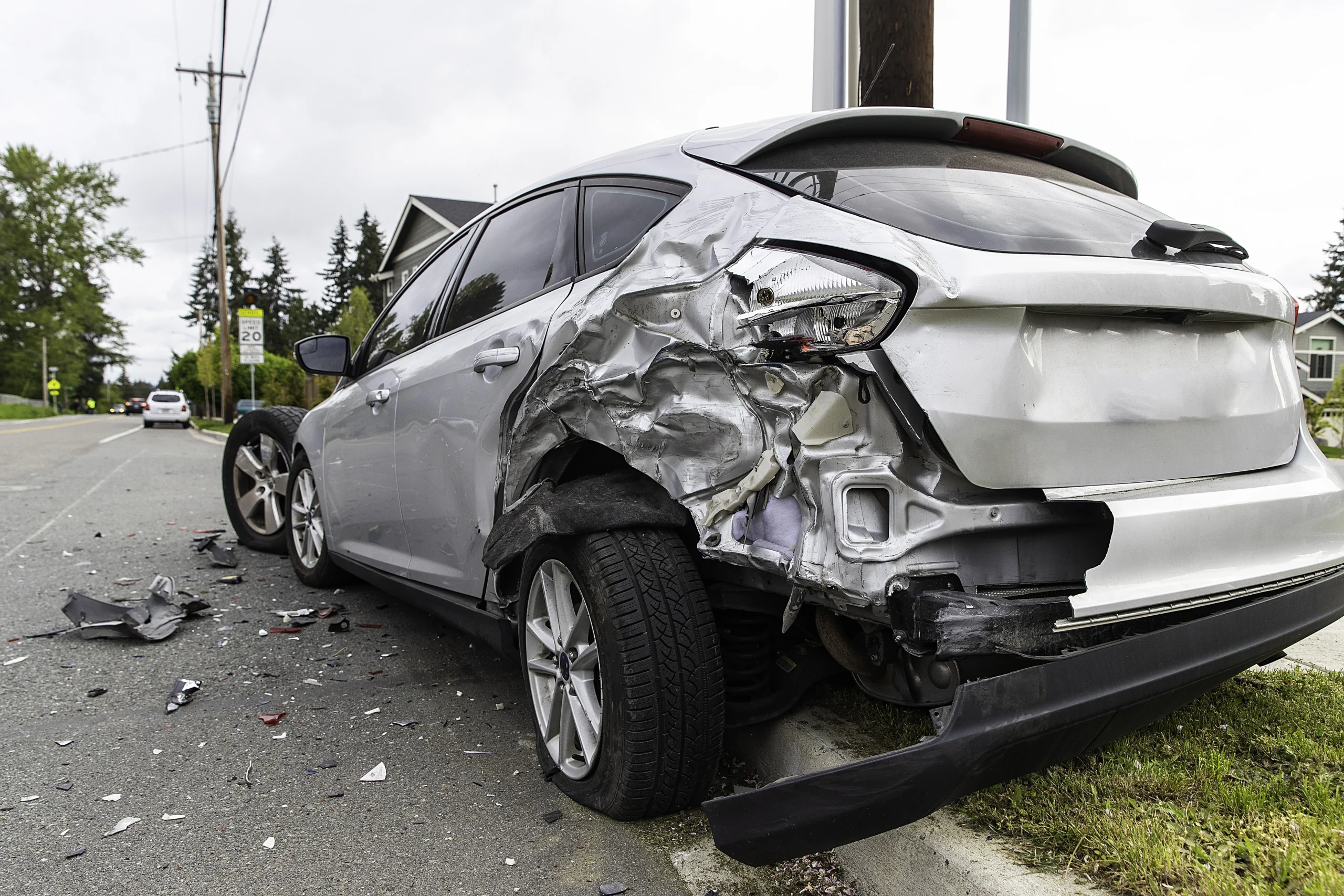



A hit-and-run car accident can leave you dealing with injuries, vehicle damage, and uncertainty about who is responsible. When the other driver leaves without providing identification or insurance information, recovering compensation may become more complicated.
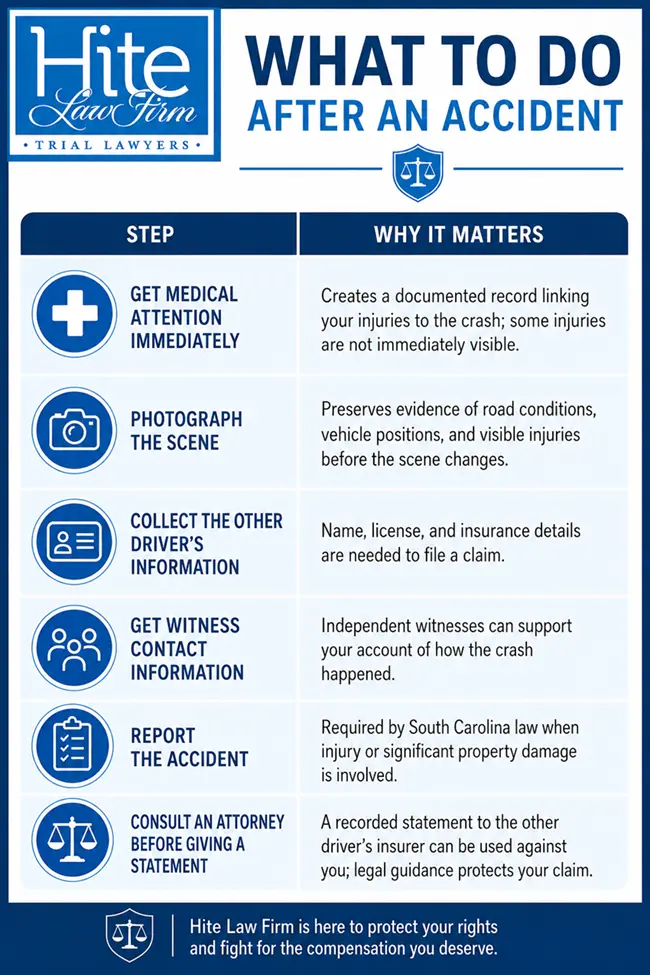
Fortunately, victims of a hit-and-run accident in South Carolina may still have options. Taking the right steps can protect your safety, preserve important evidence, and support a potential insurance claim. Understanding how these accident claims work can also help you make informed decisions.
1. Get to Safety and Contact Law Enforcement
Your first priority after a hit-and-run should be safety. If possible, move your vehicle away from traffic and check yourself and others for injuries. Call 911 if someone needs medical assistance or the accident creates an immediate danger.
Report the collision to law enforcement, even if the other driver has already disappeared. Provide the responding officer with everything you remember about the vehicle and the circumstances surrounding the crash.
Under South Carolina law, drivers involved in accidents resulting in injuries, death, or damage to attended vehicles generally must stop and fulfill specific legal obligations.
A police report provides an official record of the incident and may help investigators identify the fleeing driver. Reporting is also important for certain uninsured motorist claims involving unidentified drivers.
Never attempt to chase the fleeing vehicle. Doing so could create additional risks.
2. Record Details About the Fleeing Vehicle
Information about the other vehicle may help investigators locate its driver. Once you are safe, write down everything you remember.
Important details include:
- License plate number or partial plate information
- Vehicle make, model, size, and color
- Visible damage or identifying markings
- Driver’s physical appearance, if observed
- Direction the vehicle traveled
- Approximate time and location of the accident
- Unusual driving behavior
Even incomplete information can be useful. For example, a partial license plate combined with a vehicle description may help narrow an investigation.
Record these details promptly because memories can become less reliable over time.

3. Photograph the Accident Scene
Photographs can help establish what happened, particularly when the responsible driver cannot immediately be identified.
If conditions are safe, photograph your vehicle from multiple angles, including close-ups of damaged areas. Document nearby road signs, traffic signals, debris, skid marks, and road conditions.
Look for physical evidence left by the fleeing vehicle, such as broken headlights, paint transfer, or vehicle parts. Photograph these materials without unnecessarily moving them.
You should also document visible injuries and any changes that develop afterward.
These photographs may help investigators reconstruct the collision and provide supporting evidence for an insurance claim.
4. Identify Witnesses and Nearby Cameras

Witness statements can provide valuable information about how a hit-and-run occurred. Ask anyone who observed the collision for their name and contact information.
Nearby surveillance systems may also have recorded the accident. Potential sources include businesses, gas stations, residential properties, parking facilities, and vehicle dashcams.
When possible, contact property owners or camera operators promptly and request that relevant recordings be preserved. Some systems automatically overwrite footage after a limited period.
Video evidence can be especially important when the unidentified vehicle never made physical contact with yours.
South Carolina Code § 38-77-170 establishes specific evidence requirements for certain uninsured motorist claims involving unknown drivers. Depending on the circumstances, physical contact, an independent witness, or an electronic recording may help satisfy those requirements.
5. Seek Medical Attention
Not every accident-related injury becomes noticeable immediately. Symptoms such as headaches, dizziness, neck pain, or stiffness may develop or become more apparent after the collision.
Seek appropriate medical care if you experience symptoms, and obtain emergency assistance for serious injuries.
Explain to your healthcare provider that you were involved in a motor vehicle accident and describe your symptoms accurately.
Medical documentation can establish the nature of your injuries, the treatment received, and associated expenses.
Keep copies of medical bills, prescriptions, discharge instructions, and other relevant records. Follow recommended treatment plans and attend necessary follow-up appointments.

6. Notify Your Insurance Company

Contact your auto insurance company promptly after reporting the accident. Most policies contain notification requirements that should be reviewed carefully.
Provide accurate information about the collision without speculating about details you cannot confirm.
Your insurer may request photographs, a police report, repair estimates, or medical documentation to evaluate the claim.
Keep records of communications with insurance representatives, including claim numbers and correspondence.
Depending on your policy and the circumstances, uninsured motorist coverage may provide an avenue for recovering certain losses when the responsible driver cannot be identified.
7. Organize Your Accident Records
Keeping accident-related documents organized can make the insurance process easier.
Create a folder containing your police report, photographs, witness contact information, medical bills, repair estimates, towing receipts, and insurance correspondence.
Include documentation of missed work or other financial losses connected to the accident.
The South Carolina Department of Motor Vehicles provides a process for obtaining collision reports. Certain accidents not investigated by law enforcement may also require an FR-309 report.
According to SCDMV instructions, qualifying uninvestigated collisions involving at least $1,000 in total property damage, bodily injury, or death must be reported within 15 days.
Preserve original digital files whenever possible because timestamps and other information may become relevant.
Can Uninsured Motorist Coverage Apply to a Hit-and-Run?
Yes. South Carolina uninsured motorist (UM) coverage may provide compensation when an unidentified driver causes an accident. However, claims involving unknown drivers must meet specific legal requirements.
Under S.C. Code § 38-77-170, these requirements generally include:
- Police reporting: The accident must be reported to an appropriate police authority within a reasonable time.
- Evidence of the unknown vehicle: The claim must satisfy statutory evidence requirements. These may involve physical contact, an independent witness who provides a qualifying affidavit, or an electronic recording that meets statutory conditions.
- Reasonable efforts to identify the driver: The injured person must not have been negligent in failing to determine the unknown driver’s identity.
These requirements are particularly important when a fleeing vehicle causes an accident without making physical contact. For example, a driver may swerve to avoid another vehicle and crash into a roadside barrier. Available video footage or independent witness testimony may help establish the unidentified driver’s involvement.
Meeting the statutory requirements does not automatically guarantee compensation. Insurance policy provisions, liability evidence, and the extent of the injuries can still affect recovery.
For additional information, review how uninsured motorist coverage works in South Carolina.
What Happens if the Hit-and-Run Driver Is Found?
If law enforcement identifies the fleeing driver, their insurance status may determine how the claim proceeds.
When the driver has applicable liability insurance, an injured person may be able to pursue compensation through that policy. If the driver is uninsured, uninsured motorist coverage may remain relevant.
Identifying the driver does not automatically establish fault or determine compensation.
Investigators and insurance companies must still consider the available evidence, the circumstances of the accident, and the extent of any resulting losses.
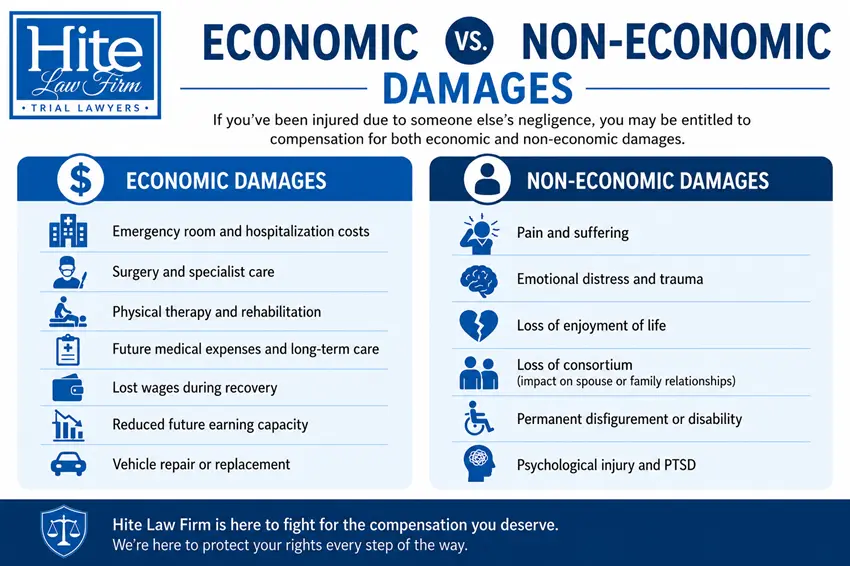
What Compensation Is Available After a Hit-and-Run?
Compensation depends on the severity of the accident, the injuries sustained, applicable insurance coverage, and other legal factors.
Potential recoverable losses may include:
- Medical expenses and rehabilitation costs
- Lost wages or reduced earning capacity
- Vehicle repairs and other property damage
- Pain and suffering
- Future medical expenses related to lasting injuries
Not every category of compensation applies to every claim. Insurance policy limits, coverage provisions, and the available evidence can affect recovery.
Understanding which insurance policies may apply is an important part of evaluating a hit-and-run accident claim.
When Should You Contact a Hit-and-Run Accident Lawyer?
Not every minor accident requires an attorney. However, legal guidance may be helpful when injuries are significant, the responsible driver remains unidentified, liability is disputed, or an insurance company challenges coverage.
A hit-and-run accident lawyer can evaluate available evidence, review insurance policies, and help determine which legal options may apply.
Legal assistance may be particularly valuable when an uninsured motorist claim involves South Carolina’s specific reporting and evidence requirements.
Acting promptly can also help protect important information before it becomes unavailable.
A driver leaving the scene does not necessarily prevent an injured person from pursuing compensation. If you were injured in a South Carolina hit-and-run accident, Hite Law Firm can review your circumstances, explain your options, and help determine appropriate next steps.
Injured in a Hit-and-Run? Understand Your Legal Options.
An unidentified driver does not necessarily leave you without a path to compensation. Hite Law Firm can evaluate your insurance coverage, investigate available evidence, and help you pursue a qualifying claim.
Speak With Our Attorneys